Introducing the JWTTool Module
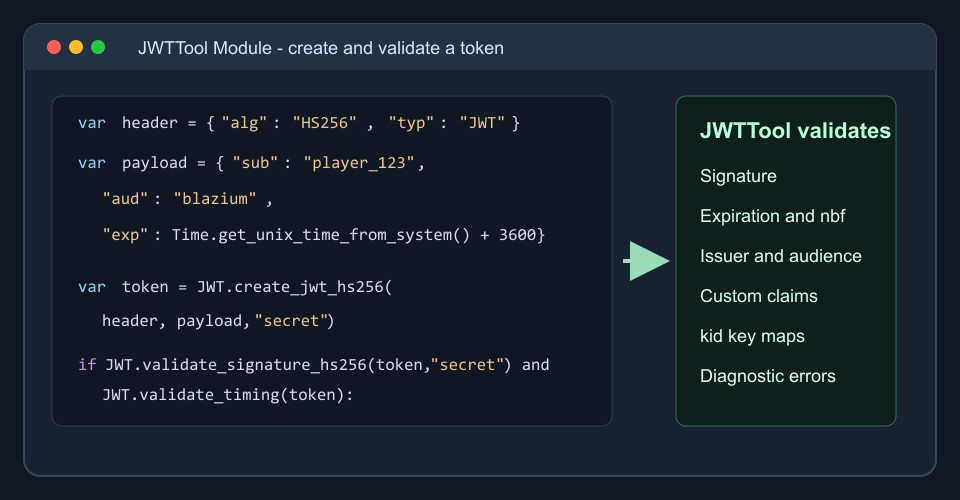
Blazium Game Engine now includes a built-in JWTTool module for working with JSON Web Tokens directly from your projects. Whether you are authenticating players, validating backend-issued session tokens, signing local service messages, or building secure tools, JWTTool brings token creation, parsing, and verification into the engine without relying on external addons.
The module exposes the JWT singleton for common operations, JWTBuilder for fluent token creation,
and DecodedJWT for inspecting parsed tokens and reading typed claims.
It supports HMAC-based HS256 tokens, RSA-based RS256 tokens through Blazium's CryptoKey support,
registered claim helpers, timing checks, key selection, revocation, and diagnostic results for better tooling and logs.
Key Features
- Engine-Level JWT Singleton: Use the global
JWTsingleton to create, parse, decode, validate, and inspect tokens from GDScript or C#. - HS256 and RS256 Support: Sign and verify shared-secret tokens with
HS256, or use RSA keys withRS256for public/private key workflows. - Fluent Token Builder: Create tokens with
JWTBuilderby setting the algorithm, issuer, subject, audience, expiration, JWT ID, and custom claims. - Decoded Token Helpers: Use
DecodedJWTto read headers, payload values, registered claims, and typed claim values after parsing. - Claim and Header Validation: Validate expected payload claims, header claims, algorithm choices, and token structure with dedicated helpers.
- Timing Controls: Check expiration, not-before (
nbf) values, issued-at timing, and leeway windows for real-world clock drift. - Key ID Workflows: Read
kidheaders and validate against key maps withvalidate_with_map, making multi-key rotation easier to manage. - Revocation and Diagnostics: Revoke tokens by
jti, clear revocation state, and use diagnostic dictionaries to explain validation failures.
Why Add JWTTool to a Game or Application?
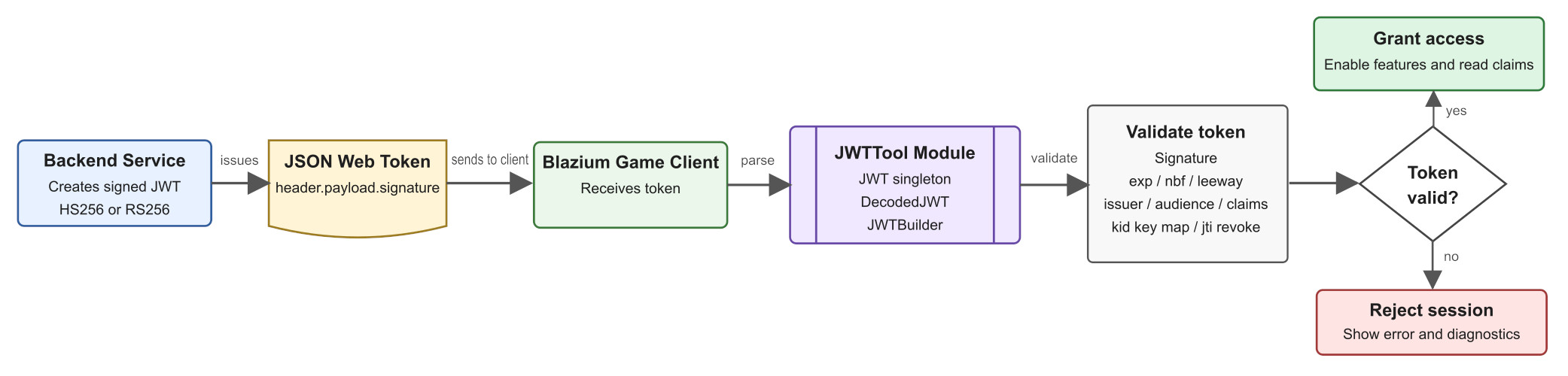
JWTs are a common bridge between games, web services, launchers, account systems, dashboards, and internal tooling. With JWTTool built into Blazium, projects can validate tokens close to the gameplay or application logic that depends on them. That makes it easier to gate features, read session metadata, and verify signed messages without writing a custom token stack.
For Games
- Player authentication: Accept backend-issued tokens and validate issuer, audience, expiration, subject, and signature before enabling online features.
- Entitlements and feature gates: Store signed claims for DLC access, beta flags, roles, cosmetics, or tournament permissions.
- Dedicated server handoff: Pass short-lived tokens from matchmaking or account services to headless Blazium servers.
- Secure streamer or creator integrations: Validate signed identity or permission tokens before connecting gameplay to external services.
- Token rotation workflows: Use
kidheaders and key maps to support multiple signing keys during migrations.
For Applications & Tools
- Build admin panels, launchers, dashboards, or internal tools that understand JWT-based authentication.
- Create signed automation payloads for CI, build tooling, local services, or companion applications.
- Use diagnostic validation output to surface clear token errors in logs, editor tools, or QA workflows.
Because the module works with Blazium's existing Crypto APIs, it fits naturally alongside other
engine networking and backend-facing features.
Applications can keep remote JWKS fetching, account policy, or secret storage in their own service layer
while JWTTool handles the token mechanics inside the engine.
Documentation & Next Steps
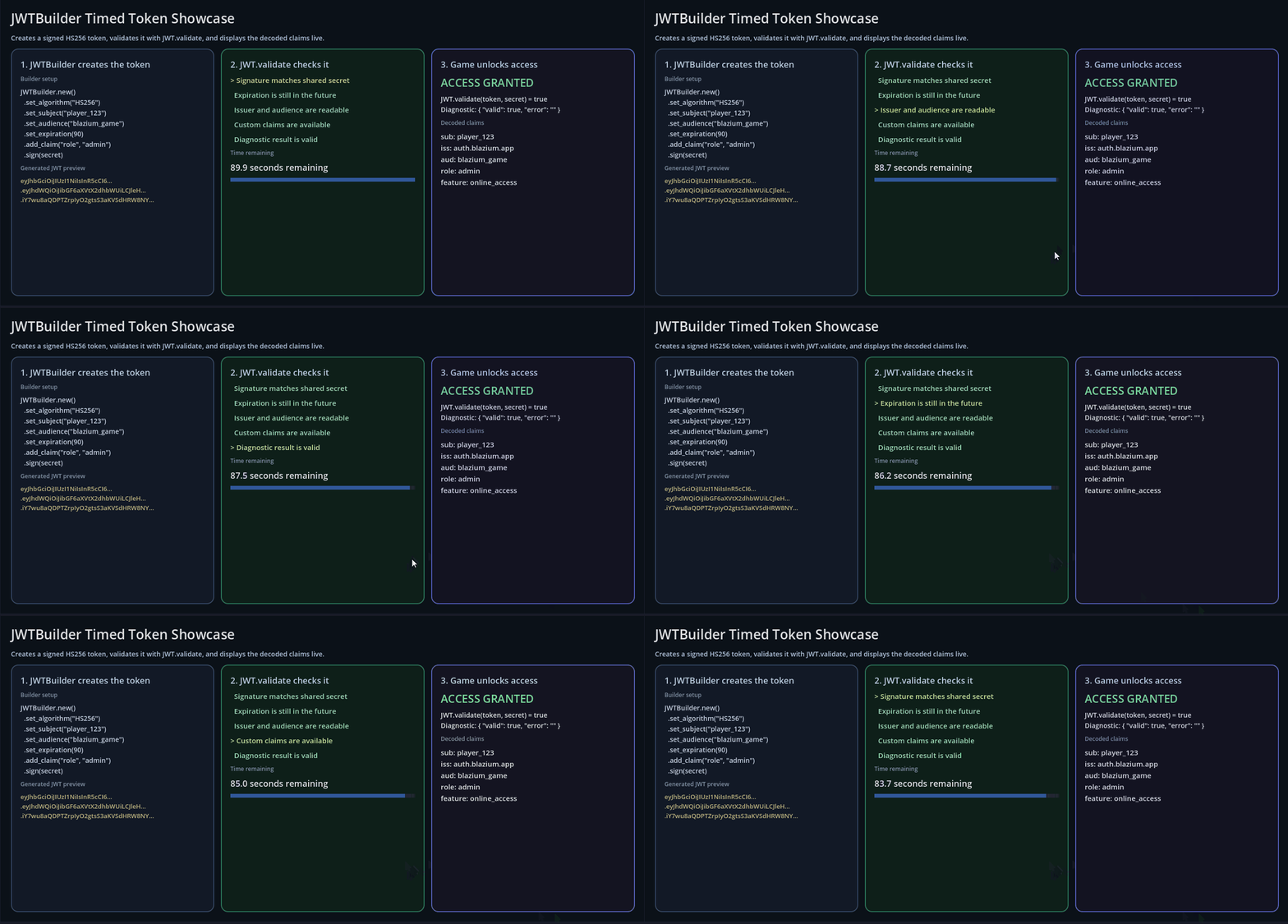
The module is already available in the latest nightly of Blazium and includes a dedicated test project (see jwttool_module_tests for examples).
From small internal tools to online games with account-backed services, the JWTTool module gives Blazium projects a practical native foundation for token-based authentication and signed claims.
Jump into our Discord for real-time chats, dev support and feedback
Or follow us everywhere else: